Luke 1:57-80 — The Birth and Early Steps of John the Baptist: The Dawn That Breaks the Silence
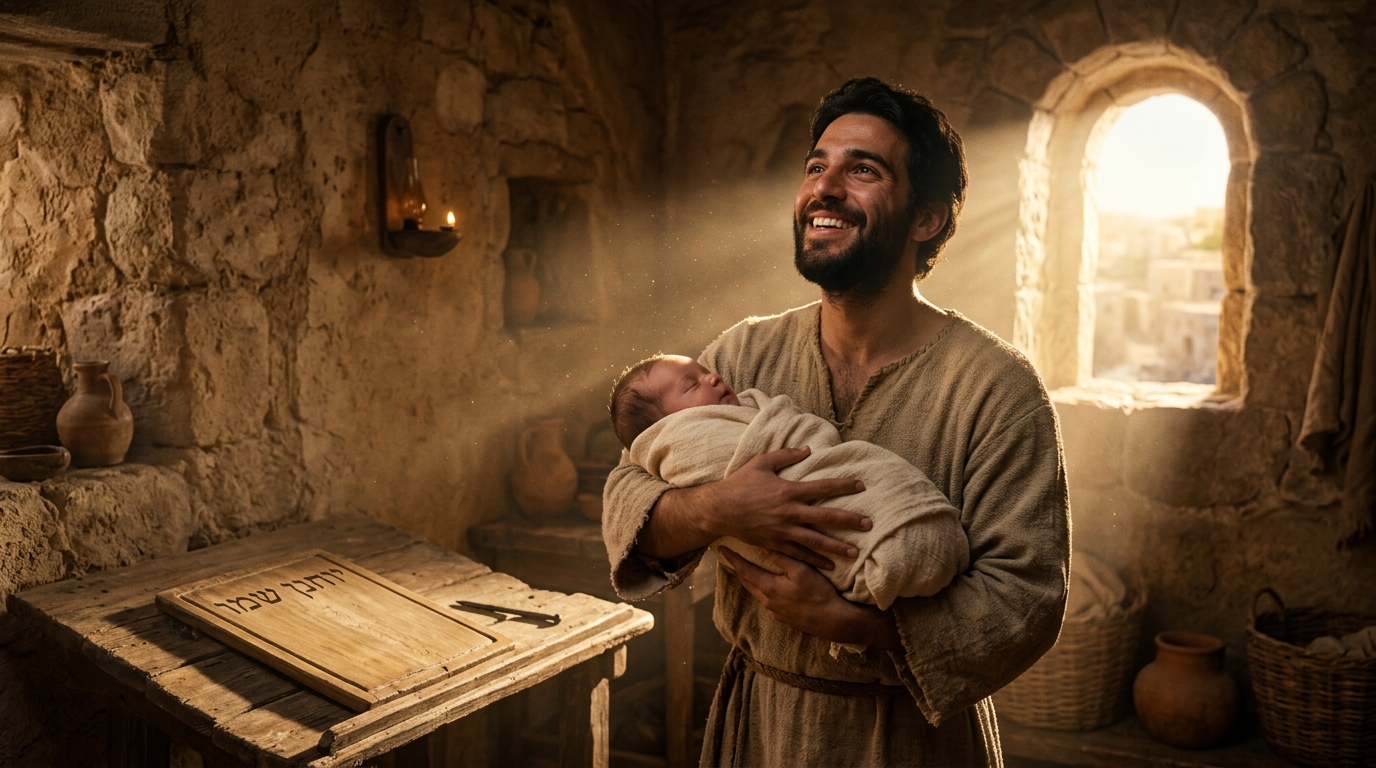
"Immediately his mouth was opened and his tongue loosed, and he spoke, praising God... And you, child, will be called the prophet of the Most High; for you will go before the Lord to prepare his ways, to give knowledge of salvation to his people in the forgiveness of their sins, because of the tender mercy of our God, whereby the sunrise shall visit us from on high to give light to those who sit in darkness and in the shadow of death, to guide our feet into the way of peace. And the child grew and became strong in spirit, and he was in the wilderness until the day of his public appearance to Israel." — Luke 1:64, 76-80
We have all experienced seasons where heaven seems quiet. Times when prayers offered over many years appear unanswered, when emotional weariness and circumstance whisper that divine promises have expired. For nine long months, the priest Zechariah lived immersed in total silence—an enforced quietude away from the hustle of temple rituals, where every single day served as a sacred classroom of surrender, patience, and contemplation of divine faithfulness.
The birth of John the Baptist was not merely the arrival of an infant born against all biological odds; it marked the historic moment when God shattered four centuries of prophetic silence in Israel. In Luke 1:57-80, we see that the Lord's mercy is never delayed and His covenants are never forgotten: when the appointed time arrives, silence turns into song, uncertainty into bold proclamation, and the deepest darkness is pierced by the dawn from on high.
1. The Fullness of Time: Mercy That Overflows the Home (Luke 1:57-58)
The account opens with a serene yet powerful affirmation: «Now the time came for Elizabeth to give birth, and she bore a son». By earthly standards and contemporary medical knowledge, Elizabeth and Zechariah were elderly and barren, their family branch destined to fade. Yet, on heaven’s calendar, apparent delays are never cancellations; they are the canvas upon which God's sovereign glory is displayed most vividly.
When their neighbors and relatives heard that the Lord had shown great mercy to Elizabeth, they came together to rejoice with her. The joy of God’s kingdom is communal and uplifting. The Lord does not perform His wonders in isolated corners to leave us lonely; He ignites beacons of living hope that inspire whole communities. Those who had once witnessed years of silent heartache now stood as firsthand witnesses that God’s faithfulness never arrives late.
2. «His Name Is John»: Obedience That Transcends Tradition (Luke 1:59-63)
On the eighth day, according to the Law, family and friends gathered for the child's circumcision and assumed he would be named after his father, Zechariah. In ancient Jewish culture, keeping the family name preserved ancestral honor and worldly legacy. However, Elizabeth spoke with firm conviction: «No; he shall be called John». Surprised and perplexed, noting that none of their relatives bore that name, they made signs to the mute father to learn what he wanted him to be called.
Zechariah asked for a writing tablet and inscribed with absolute clarity: «His name is John». Notice that he did not write «I would like him to be called John» or «I suggest John»; he wrote in the present tense a reality already decreed in heaven: «His name is John» (Yochanan, meaning «God has been gracious»). In that inscription upon wax, Zechariah proved that his nine months of silence had borne fruit: he had laid aside human prestige and genealogical pride to surrender completely to the divine will. True faith dares to name things as God names them, even when doing so defies the customs and expectations of the world.
3. The Tongue Loosed in Praise: Finding Voice Through the Process (Luke 1:64-66)
The moment obedience was sealed on the tablet, an inner miracle manifested: «Immediately his mouth was opened and his tongue loosed, and he spoke, praising God». Zechariah’s silence had originated from a moment of doubt before the angel Gabriel in the sanctuary, but it ended in genuine reverence. God did not close his mouth out of vindictive anger, but as a loving pause to heal his unbelief and reshape his heart.
When Zechariah's speech returned, his first words were not complaints about months of isolation or grievances over personal struggles. What welled up from his soul was unhindered praise, gratitude, and worship to the Creator. When we allow God to refine us during seasons of quiet waiting, we emerge without bitterness, our words purified and our hearts ready to proclaim His praise. A holy awe swept across the hill country of Judea, and all who heard wondered: «What then will this child be? For the hand of the Lord was with him».
4. The Prophetic Song (The Benedictus): The Dawn Breaking Over Darkness (Luke 1:67-79)
Filled with the Holy Spirit, Zechariah did not recite a self-centered song celebrating his fatherhood, but a Christ-centered prophecy. He praised the Lord God of Israel because «he has visited and redeemed his people», raising up a horn of salvation in the house of David. Then, looking with tender love upon his newborn son, he pronounced his sacred calling: to go before the face of the Lord to prepare His ways and herald the forgiveness of sins.
Verses 78 and 79 express one of the most radiant metaphors in all of Holy Scripture: «Because of the tender mercy of our God, whereby the sunrise shall visit us from on high to give light to those who sit in darkness and in the shadow of death, to guide our feet into the way of peace». The original term for tender mercy speaks to the deepest inward compassion of our Heavenly Father. The arrival of the Messiah is like the rising sun piercing the coldest, darkest hour of the night. Whenever life feels shadowed by grief, fear, or discouragement, God's Word reminds us that Christ's eternal light has broken upon the horizon to lead our steps into lasting rest and peace.
5. The Wilderness as the Soul's Workshop (Luke 1:80)
The passage concludes with a profound biographical insight: «And the child grew and became strong in spirit, and he was in the wilderness until the day of his public appearance to Israel». John was not hurried into the public eye or rushed to the bustling courts of Jerusalem. Long before his voice echoed along the banks of the Jordan River, God shaped him in the simplicity, solitude, and inner fortitude of the wilderness.
We often long for the immediate realization of our dreams and ministries, but God cherishes the hidden seasons where character is forged. In the quiet desert of preparation, we learn to depend solely on heavenly bread, to look away from human applause, and to strengthen the spirit above all earthly cravings. If you find yourself in a quiet wilderness today, do not lose heart: you are in God's workshop, being prepared to shine with His enduring light when the appointed hour arrives.
Prayer and Declaration of Faith
"Lord God Almighty, Father of boundless grace and Comforter of our souls: Today we come before Your holy presence recognizing the unfathomable wisdom of Your ways and the perfection of Your timing. We confess that our impatience, our doubts, and the pressure to conform to worldly expectations have often clouded our trust in Your eternal promises. Forgive us for the moments when we murmured during seasons of silence or allowed discouragement to silence the praise on our lips. Today we surrender upon Your altar all anxiety about tomorrow, every need for earthly approval, and all uncertainty, resting in the unshakable truth that Your mercy is never delayed and Your purposes can never be thwarted.
We stand boldly in faith today declaring that, just as You visited Zechariah and Elizabeth, Your heavenly light is rising over our lives, dispelling every shadow of fear, barrenness, and grief. We declare that our homes and families rest securely beneath the sovereign shelter of Your hand, and that even in quiet wilderness seasons our spirits are growing strong to walk in Your holy purpose. We choose to obey Your voice above human traditions, to dedicate our speech to blessing Your holy name, and to let the dawn of Your redeeming grace guide our feet into paths of victory and everlasting peace. In the glorious name of Jesus Christ. Amen."