John 1:35-51 — Jesus Calls His First Disciples: "Come and See"
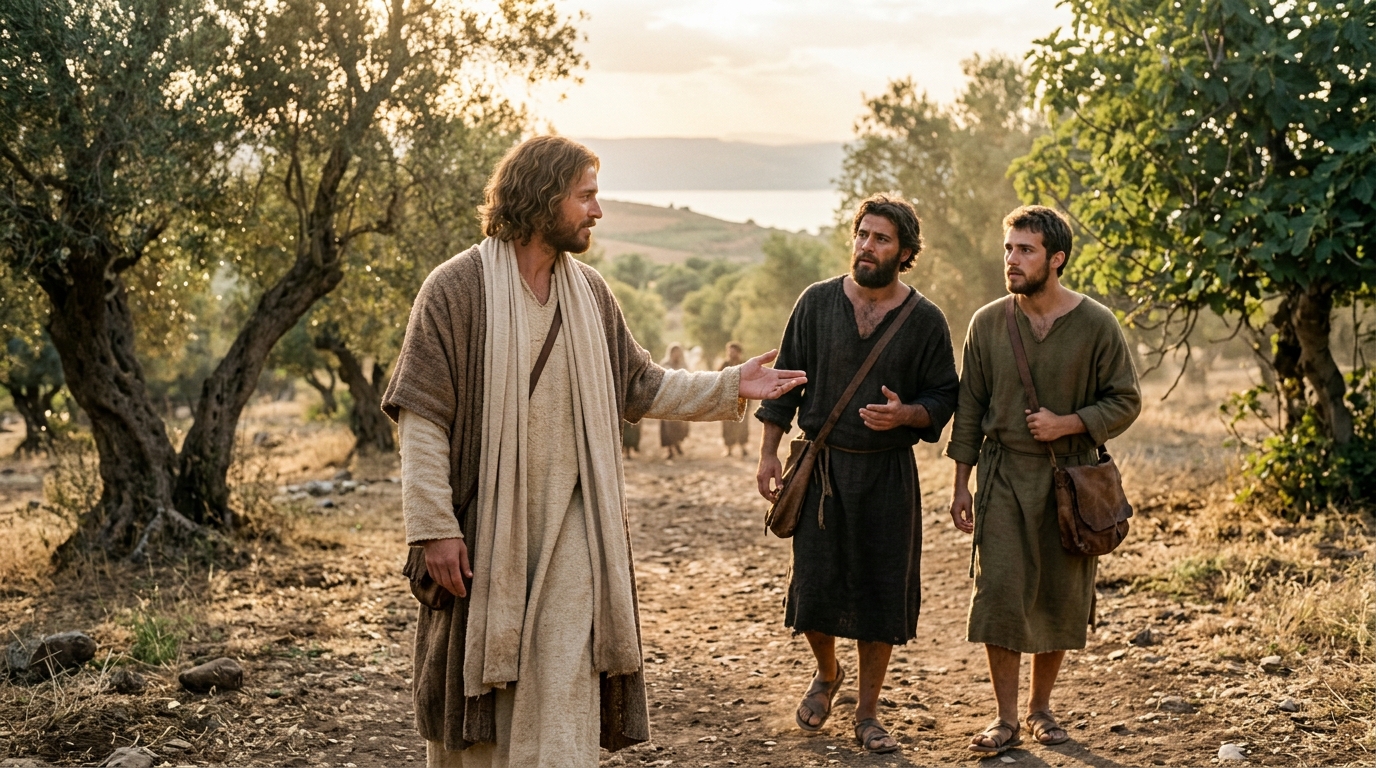
"Turning around, Jesus saw them following and asked, 'What do you want?' They said, 'Rabbi' (which means 'Teacher'), 'where are you staying?' 'Come,' he replied, 'and you will see.' So they went and saw where he was staying, and they spent that day with him. It was about four in the afternoon... And Andrew brought Simon to Jesus. Jesus looked at him and said, 'You are Simon son of John. You will be called Cephas' (which, when translated, is Peter)... 'How do you know me?' Nathanael asked. Jesus answered, 'I saw you while you were still under the fig tree before Philip called you.'" — John 1:38-39, 42, 48
Every human being spends their lifetime searching for something. We search for financial security, belonging, meaningful purpose, mental peace, or genuine answers to loneliness and pain. Yet amid the clamor of modern life and the countless empty promises that claim to satisfy the human soul, it is common to experience a persistent sense of aimlessness: we chase after milestones only to discover that our deeper spiritual thirst remains unquenched.
In this pivotal chapter of the Gospel of John (1:35-51), we witness the gentle dawn of Christian discipleship. It did not commence in an academic lecture hall or through a high-profile public campaign, but through an authentic, heartfelt chain of personal encounters. As we watch Jesus stop, turn around, and gaze warmly at those early seekers, we discover how the Savior disarms our self-protective walls, renews our true identity, and extends an enduring invitation that still calls to us today: "Come and see".
1. The Heart-Searching Question: "What Do You Want?" (vv. 35-38)
The narrative opens the following day as John the Baptist once again points to the Savior: "Look, the Lamb of God!". Captivated by this testimony, two young disciples began following Jesus along the road.
Suddenly, Jesus stops, turns around, and speaks His very first recorded words in this Gospel:
"What do you want?" (v. 38)
Notice the divine precision of His inquiry: Jesus does not ask, "Who are you looking for?" or "What theology do you understand?". He asks what they truly desire in the depths of their souls. It is a question that cuts straight to the root of our human motivation: Do we seek God merely to receive temporary relief, or do we truly desire His transforming presence? A bit surprised yet sincere, the disciples respond with an honest question of their own: "Rabbi, where are you staying?". They did not want a quick roadside chat or an abstract discussion; they wanted to dwell with Him and know Him personally.
2. "Come and See": Faith as an Encounter, Not a Theory (v. 39)
The Lord’s response was neither a lecture nor an intellectual riddle:
"‘Come,’ he replied, ‘and you will see.’ So they went and saw where he was staying, and they spent that day with him. It was about four in the afternoon." (v. 39)
The intimacy of that late afternoon left such an indelible mark on John (who wrote this Gospel decades later, still remembering the precise hour) that it redirected his entire life.
Biblical faith is never a collection of rigid rules or detached theories; it is a living, vibrant relationship. Jesus does not demand that we resolve every intellectual puzzle before we approach Him; He simply says: "Come and see for yourself. Spend time in my presence, pour out your heart in quiet prayer, and taste the peace that only I can give".
3. From Simon to Peter: The Look That Redefines Identity (vv. 40-42)
The joy of discovering the Living Truth cannot be kept to oneself. Andrew immediately rushes to find his brother Simon with a radiant declaration: "We have found the Messiah", and brings him directly to Jesus.
"Jesus looked at him and said, 'You are Simon son of John. You will be called Cephas' (which, when translated, is Peter)." (v. 42)
The Greek verb used here for "looked at him" (emblepsas) conveys an attentive, penetrating gaze filled with divine discernment. Jesus looked at Simon and did not see merely an impulsive, fluctuating, rough-edged fisherman; He saw the rock-solid leader that divine grace would forge.
The world often defines and labels us by our past failures, our weaknesses, or our current struggles. But when Jesus looks at you, He sees your redeemed future. He knows where you are right now, but His grace is already molding who you will become.
4. "Come and See": The Living Antidote to Skepticism (vv. 43-46)
The next day, Jesus calls Philip, who in turn seeks out his skeptical friend Nathanael, proclaiming they have found the One written about by Moses and the prophets: Jesus of Nazareth.
Nathanael's initial reaction was steeped in the common local prejudice:
"Nazareth! Can anything good come from there?" (v. 46)
Nazareth was an obscure agricultural outpost without prestige or prophetic distinction. Yet Philip’s response is a masterpiece of spiritual wisdom: he avoided an exhausting debate and refused to argue over geographic credentials. Instead, he simply echoed the words of his Master:
"Come and see."
When we share God’s hope with friends or family members who wrestle with doubts, we do not need to possess answers to every philosophical objection or win intellectual arguments. The greatest gift we can offer is a loving invitation to experience Christ’s real, living presence directly.
5. "Under the Fig Tree": The God Who Sees What Is Hidden (vv. 47-51)
As Nathanael approaches, Jesus surprises him with a profound commendation: "Here truly is an Israelite in whom there is no deceit". Stunned, Nathanael asks: "How do you know me?".
Jesus' answer shatters every layer of skepticism:
"I saw you while you were still under the fig tree before Philip called you." (v. 48)
In Jewish culture, the quiet shade of a fig tree was the customary place for prayer, meditation, and seeking God in secret. Whatever Nathanael had experienced in that hidden retreat—perhaps an agonizing plea, an unspoken heartache, or an earnest prayer—had been completely visible to the Savior. Instantly recognizing that he was standing before the One who searches every heart, Nathanael confesses: "Rabbi, you are the Son of God; you are the King of Israel!".
In your own personal "fig tree"—in the silence of your room, in lonely moments when tears fall unnoticed, or in seasons where you wonder if anyone truly understands what you are carrying—Jesus sees you. You are never invisible to God. Every silent prayer and every sigh of your heart is held in His loving gaze.
Jesus concludes with a majestic promise: "You will see greater things than that... you will see ‘heaven open, and the angels of God ascending and descending on’ the Son of Man". Echoing Jacob's ancient vision of the ladder between earth and heaven (Genesis 28), Jesus reveals Himself as the ultimate bridge: in Him, the gap between humanity and the Father is bridged forever, and divine glory is made accessible to all.
6. Practical Application: Responding to Jesus' Invitation Today
- Pause and answer His question honestly: In your quiet moments today, ask your heart: What am I really seeking? Lay your deepest desires before the Lord and invite Him to be your supreme treasure.
- Rest in His intimate knowledge of your life: You never need to wear a mask before God. He saw you under your fig tree; He knows your every trial and loves you with an unconditional, everlasting love.
- Be a welcoming voice to others: You do not need polished speeches to point people toward hope. Simply share what Christ has done in your life and invite those around you with a sincere "come and see".
Prayer and Declaration of Faith
"Lord Jesus, today I hear Your gentle question echoing in my heart: What do you want? I confess that so often I have sought lasting fulfillment in temporary things that leave the soul empty. Today I gladly accept Your invitation to come, dwell in Your presence, and learn from You.
Heavenly Father, thank You that Your eyes see every detail of my life. You saw me under my fig tree; You know my silent struggles, my quiet tears, and my deepest longings. Thank You that Your gaze over me is not one of condemnation, but of redemptive love, transforming my weaknesses into strength.
Dispel every trace of cynicism and doubt from my mind. Open heaven over my home and family. Give me the humility to walk closely with You and the boldness to invite others to know You, declaring with joy: Come and see. In Your holy name, Jesus, Amen."